


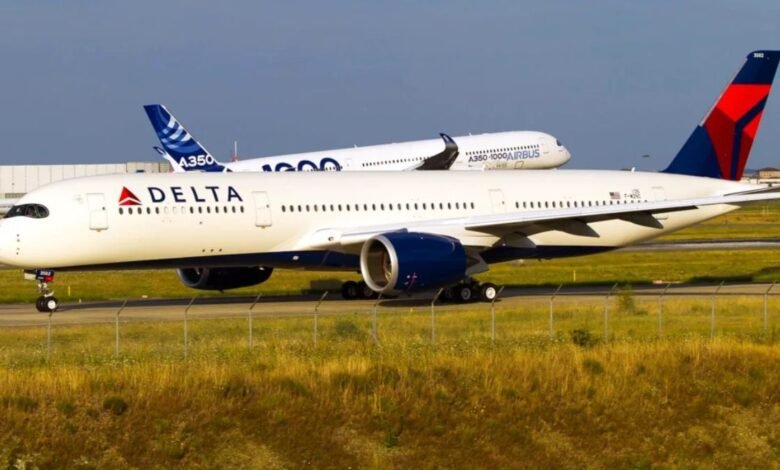
Introduction to Delta Flight DL275 Diverted LAX:
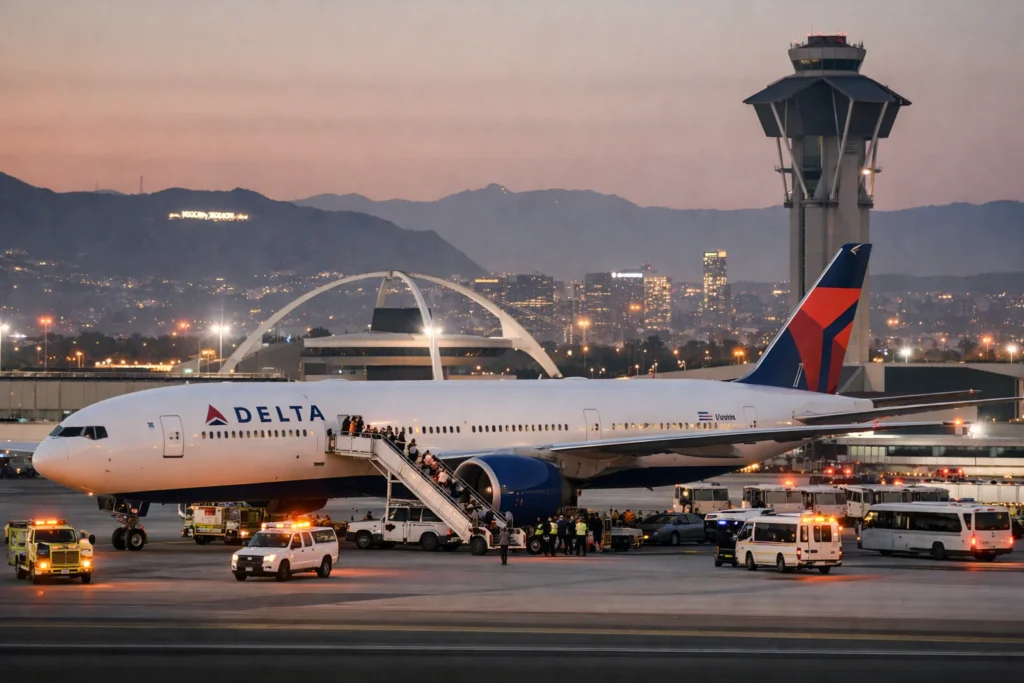
The Delta Flight DL275 in the news recently was fairly diverted to Los Angeles International Airport. The flight was originally to fly Detroit to Tokyo but it was forced to divert mid-air as a result of a technical glitch. The question that was on the minds of passengers and other aviation enthusiasts was what happened to cause the diversion and whether there was any risk, and what the airline did about it. In this article, we tear the complete story, the reasons of the diversion, and what is known about it concerning the safety of modern flights
What Occurred In the Flight:
The plane took off from Detroit as scheduled and was bound towards Tokyo Haneda Airport. Halfway into the trip, the crew realized that there was a technical anomaly in the systems of the plane. The pilots decided to make the precautionary diversion to Los Angeles International Airport after considering the situation. The plane was not shaky, and people were notified about it in the process of flying. The LAX landing had been fruitful and no accidents were reported.
Why Was Delta Flight DL275 Diverted LAX?
The diversion was caused by a faulty engine anti-ice system that is vital in stopping ice accumulation on engines when flying at a high altitude. Even the slightest problems with this system cannot be disregarded since ice can influence the engine functioning and the overall airplane safety. The pilots were justified by the set safety standards and made the closest major airport that could effectively handle the plane, as it was safe to make further flight in its new way.
Emergency or Preventionary Diversion.
It should be noted that it was not an emergency landing. The plane did not experience any situation which caused it to be unstable and the pilots did handle the situation in a professional and calm manner. Some of the safety requirements in aviation focus on prevention and this diversion is a proactive measure of preventing any possible risk. No passengers were ever at direct risk and the move by the crew was a way of guaranteeing safety and at minimal disruption.
Delta Flight DL275 Diverted Lax: Aircraft and Technical Details

Delta Flight DL275 Diverted LAX: Delta Flight DL275 was flown on an Airbus A350-900 which is among the latest advanced long-haul aircraft that is currently in operation in the business market. The A350-900 is famous due to its fuel efficiency, comfort in the passenger, and innovative technology, and it is developed to work long-distance routes with the maximum reliability. It is the favorite aircraft that is used in long-haul flights due to its large cabin space and technological systems that assure safety and comfort to passengers during long trips.
Its engines are Rolls-Royce Trent XWB engines that have advanced monitoring systems that notice even the slightest anomaly immediately. These systems keep constant track on the engine performance, engine temperature and other vital parameters such that pilots and ground crews can react proactively to any technical problem. The monitoring system in Delta Flight DL275 warned the crew of a slight issue with the engine anti-ice system, and the crew could make the precautionary decision to regulate the takeoff.
The A350-900 also includes various redundant safety systems such as dual flight control computer, back-up hydraulics and high-technology navigation systems. These duplicates will guarantee that, in the event of the failure of one system the aircraft can still fly safely with other system complexes replacing the failed ones. This advanced monitoring coupled with redundancy enables pilots to control technical problems without affecting the safety of passengers.
Upon reaching LAX the plane was thoroughly checked by maintenance crews of Delta. All the systems that were critical such as engines, avionics, and flight controls were well checked and the aircrafts were confirmed to all the safety requirements before they were put back into service. This thorough observation shows how contemporary aviation is both technologically advanced and highly safety-conscious in its quest to ensure the utmost safety measures.
Overall, the A350-900’s design, advanced monitoring systems, and robust safety features played a key role in managing the Delta Flight DL275 Diverted LAX Today situation efficiently and safely, demonstrating the sophistication and resilience of modern long-haul aircraft.
Learning the Engine Anti-Ice System:
In order to value the necessity of the diversion, it is worth taking a closer look at the mechanism of the anti-ice system in the context of the modern jet engines. In the high altitude flights, aircrafts are exposed to very cold air mixed with minute ice crystals or supercooled droplets. The particles have the tendency to settle on the surfaces of the engines and obstruct airflow unless they are dealt with.
This buildup is avoided by the anti-ice system, which directs the warm bleed air of the engine compressor stages to hot spots in the engine runways and nacelle. This hot air increases the temperature to an extent that prevents the formation of ice or adhesion on important surfaces. In the absence of this protection, the ice may cause decreased engine performance, vibration or worst still capsize.
In the case of delta flight dl275 diverted lax, sensors indicated a drop in the anti-ice system’s flow rate, suggesting the mechanism might not provide adequate protection during extended exposure to freezing conditions. These systems are created by engineers in a redundant way, although any degradation is considered a critical issue according to aviation regulations. Although the engine itself had not failed, thousands of miles long flights in the Pacific without effective anti-icing might pose a risk in case of a change of weather conditions or the formation of ice crystals in the engine flow path.
Why LAX Was Chosen for the Diversion
The International Airport in Los Angeles was the most rational decision as it has the capacity and infrastructure and can support its operations. The features of the airport provided that the aircraft and passengers were addressed in terms of safety and efficiency:
- Large international airport with long runways to accommodate wide body aircrafts.
- State-of-the-art maintenance and technical care centres.
- Good operational presence by Delta Air Lines.
- Easy access to rebooking of passengers and stay
- All these aspects made LAX the most feasible safest airport to use in the diversion.
Passenger Experience and Support
The diversion was inconveniencing, though professionally done, to the passengers. Good communication by the crew minimized anxiety and confusion. By landing, Delta employees helped passengers in the following aspects:
- Remaking alternative flights.
- Setting up hotel rooms where required.
- Delivering food and other basic provisions.
Any diversion may be inconveniencing, although structured support and information on time were used to make sure that passengers were comfortable and safe.
Safety and Outcome: Delta Flight DL275 Diverted LAX
There were no casualties among the passengers and the crew. The plane landed safely and nothing was reported to be hurt. This accident shows the efficiency of the current aviation systems and flight crew training. Each of the stages, starting with the identification of the technical problem, through diversion and safe landing, was performed within the strict precautionary guidelines, proving that the implemented precautionary measures were implemented precisely as they were designed.
What This Incident Reveals to us about Aviation Safety:
The diversion of Delta Flight DL275 underscores the use of current aviation to lay emphasis on passenger safety. The incident indicates the effectiveness of precautionary measures and progressive systems in ensuring that problems are averted before they become difficult to manage. Key points include:
- State-of-the-art monitoring systems identify the possible issues at an early stage.
- The proactive decisions are taken by the pilots before minor problems develop into major issues.
- Diversions are normal safety measures, and not emergencies.
- There are redundant engines, controls and avionics that are capable of ensuring safe operations.
- At big airports such as LAX, it has maintenance and operational support.
- Airlines assist passengers in rebooking, accommodation and meals.
This accident demonstrates that technology, the training process and tough measures are interdependent to ensure that air travel is safe. Such precautionary diversion measures are part of the aviation industry that ensures safety of the passengers during the entire journey.
Conclusion:
Delta Flight DL275 Diverted LAX brings out professionalism and careful decision making in the field of aviation. The airline and pilots succeeded in saving passengers, remaining calm in the situation and addressing the technical issue effectively. Diversions may introduce lesser inconveniences, but they are also an immensely necessary element in ensuring safe air travel. This accident will tell the passengers that their security is the highest priority even in cases where the plan seems to have unexpected shifts.
FAQs about delta flight dl275 diverted lax today:
1. Why was the Delta Flight DL275 diverted to Los Angeles instead of flying to Tokyo?
The plane suffered a technical flight problem in which there was a problem with the anti-ice system of the engines. Pilots selected LAX due to the fact that this is a large international airport with long runways, high-end maintenance facilities, and good operational support by Delta and thus safe to handle the aircraft and effectively resolve the problem.
2. Did Delta Flight DL275 lose risk in the diversion?
No. The diversion was preventive rather than emergent. The plane was steady in the air and the pilots handled the circumstances as per the required aviation safety measures. The passengers were not at any risk.
3. What was the time of the delay due to the diversion?
The precise delay is based on the booking of the flights and the rebooking of the passengers. Normally, such diversions contribute additional hours to the trip, which are caused by landing, inspection and logistical organisation. Delta helped customers to reschedule and get a new room to contain inconvenience.
4. Is compensation to be given on the diversion to the passengers?
As the diversion was caused by technical problems, airlines do not typically have to give out financial compensation. Passengers were however provided with backup services like alternative flights, meals and accommodations at the hotel just in case.
5. What does the incident communicate to us with regards to aviation safety?
The diversion of the Delta Flight DL275 is an indication of how efficient the current aviation systems and protocols are. The modern level of monitoring, combined with highly qualified pilots, enables detecting any possible problems at the initial stages and resolving them safely, and the safety of passengers can be guaranteed at all levels.





Leave a comment