

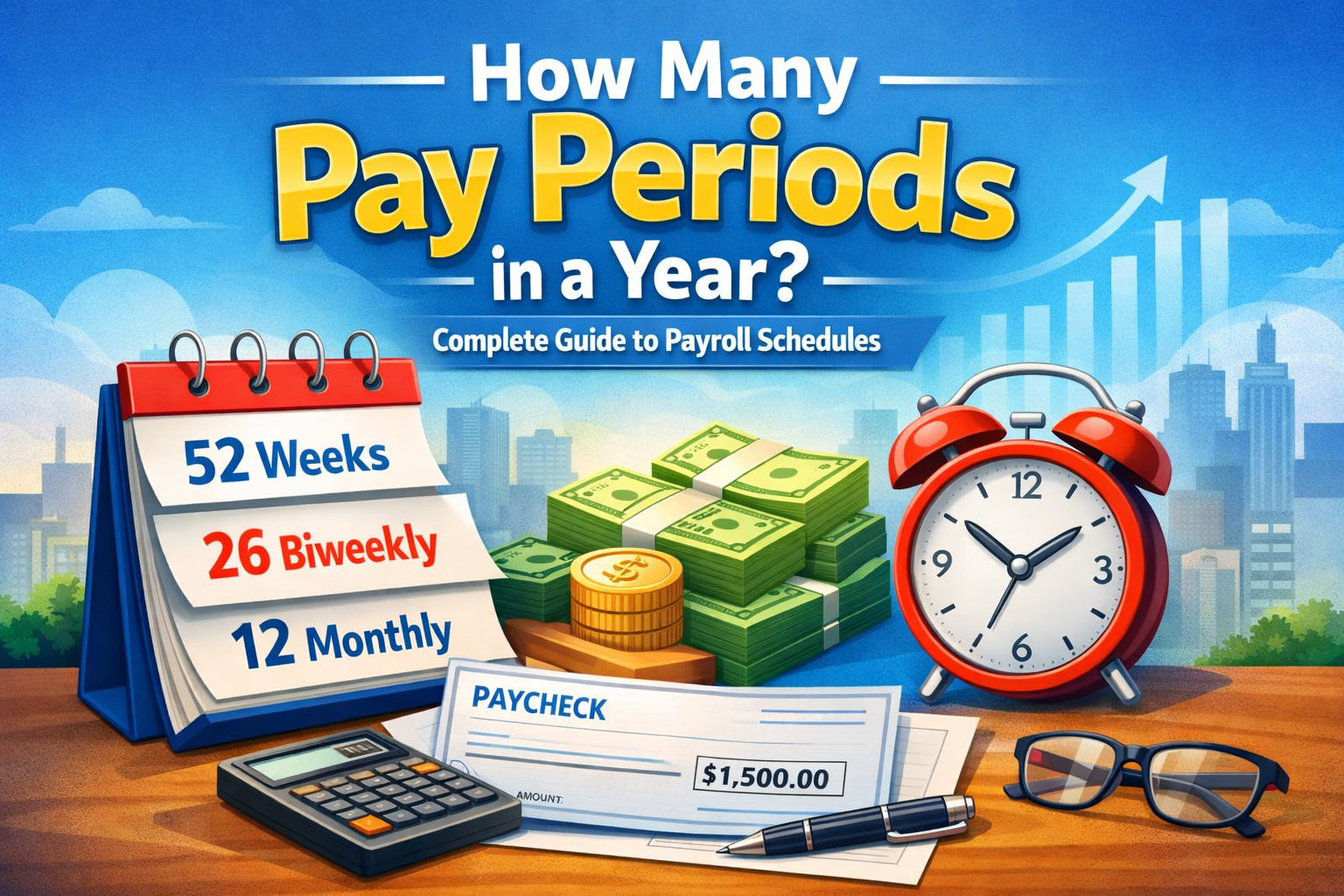
Understanding your pay schedule is one of the most important parts of managing your income. Many people ask a simple but important question: how many pay periods in a year? The answer is not always the same because it depends on how your employer structures payroll. Some employees are paid weekly, while others receive salaries biweekly, semi monthly, or monthly. Each system changes how often you get paid and how your income is distributed throughout the year.
Another factor that plays a key role is how many weeks in a year, which directly affects payroll cycles. In this guide, you will learn everything about pay periods, including how many bi weekly pay periods in a year, why some years have extra paychecks, and how to manage your money based on your pay schedule.
Understanding Pay Periods
A pay period is the recurring schedule on which an employee gets paid. It defines how often you receive your paycheck. Companies choose different payroll systems depending on their operations, employee type, and financial structure.
There are four common types of pay schedules. Weekly pay, biweekly pay, semi monthly pay, and monthly pay. Each one divides your annual salary differently. This is why two people with the same yearly income might receive different paycheck amounts depending on their pay frequency.
Understanding your pay period is important for budgeting, saving, and planning expenses. It helps you align your income with your financial obligations.
How Many Pay Periods in a Year?
The answer to how many pay periods in a year depends on your payroll schedule. There is no single universal number because different systems follow different cycles.
Here is a simple breakdown:
- Weekly pay has 52 pay periods
- Biweekly pay usually has 26 pay periods
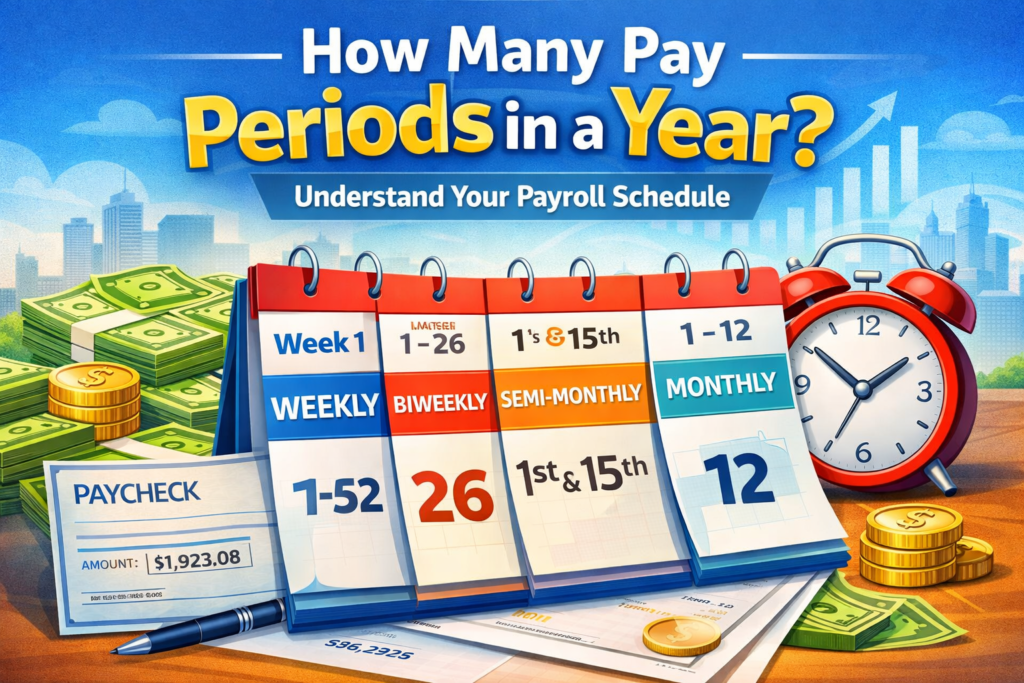
- Semi monthly pay has 24 pay periods
- Monthly pay has 12 pay periods
| Pay Schedule | Pay Periods Per Year | Description |
|---|---|---|
| Weekly | 52 | Paid every week |
| Biweekly | 26 (sometimes 27) | Paid every 2 weeks |
| Semi Monthly | 24 | Paid twice a month |
| Monthly | 12 | Paid once a month |
Among these, biweekly pay is the most common. That is why many people specifically search for how many pay periods in a year biweekly, as it applies to a large portion of employees.
How Many Weeks in a Year and Why It Matters
To understand payroll properly, you first need to know how many weeks in a year. A standard year has 52 weeks and 1 extra day. In leap years, there are 52 weeks and 2 extra days.
This small difference is important because payroll systems are based on weeks. For example, a biweekly system pays every two weeks, which means it follows a 14 day cycle. Over time, the extra days in the calendar can create slight shifts in payroll timing.
This is also the reason why some years have an extra paycheck in certain pay schedules.
How Many Bi Weekly Pay Periods in a Year?
One of the most searched questions is how many bi weekly pay periods in a year. The standard answer is 26 pay periods.
In a biweekly system, employees are paid every two weeks. Since there are 52 weeks in a year, dividing 52 by 2 gives you 26 pay periods.
This system is popular because it is simple and consistent. Employees usually receive their paycheck on the same day every two weeks, such as every Friday.
However, there is an interesting twist. In some years, employees may receive 27 paychecks instead of 26.
Why Some Years Have 27 Biweekly Pay Periods
Even though the standard answer to how many pay periods in a year biweekly is 26, some years include 27 pay periods. This happens due to the way the calendar aligns with the payroll cycle.
A year has 365 days, but a biweekly payroll cycle is based on 14 day intervals. Over time, the extra day each year adds up. After several years, this creates a situation where an additional payday fits into the calendar.
| Factor | Explanation |
|---|---|
| Days in a year | 365 days |
| Payroll cycle | 14 days |
| Extra day buildup | Adds up over years |
| Result | Extra paycheck in some years |
For employees, this can feel like a bonus paycheck. However, it is not extra income. It is simply a shift in timing.
For employers, this requires adjustments in payroll planning. For employees, it is a great opportunity to save or pay off debt.
Weekly Pay Schedule Explained
In a weekly pay system, employees receive their wages every week. Since there are 52 weeks in a year, this results in 52 pay periods.
This system is commonly used in industries like retail, construction, and hourly jobs. It provides frequent cash flow, which can be helpful for managing daily expenses.
| Feature | Weekly Pay |
|---|---|
| Pay frequency | Every week |
| Total paychecks | 52 |
| Best for | Hourly workers |
| Advantage | Frequent income |
| Disadvantage | Smaller payments |
The main advantage of weekly pay is consistency in receiving income. However, the downside is smaller paycheck amounts compared to other systems.
Semi Monthly Pay Periods Explained
A semi monthly pay schedule divides the year into 24 pay periods. Employees are usually paid twice a month, often on fixed dates such as the 15th and the last day of the month.
This system is common in corporate environments. It is different from biweekly pay because it does not follow a two week cycle. Instead, it follows calendar dates.
This can make budgeting slightly more challenging because the number of days between paychecks may vary.
Monthly Pay Periods Explained
In a monthly pay system, employees receive one paycheck per month, resulting in 12 pay periods in a year.
This system is less common in some countries but is often used for high level positions or in specific regions.
The main advantage is simplicity. However, the biggest challenge is managing expenses across an entire month with a single paycheck.
Biweekly vs Semi Monthly: Which Is Better?
Many people compare biweekly and semi monthly pay systems. Both have their own benefits, but they differ in important ways.
| Feature | Biweekly | Semi Monthly |
|---|---|---|
| Pay periods | 26 | 24 |
| Pay schedule | Every 2 weeks | Fixed dates |
| Consistency | High | Medium |
| Extra paycheck | Possible | No |
| Budgeting ease | Flexible | Structured |
Biweekly pay provides 26 paychecks per year and follows a consistent two week cycle. Semi monthly pay provides 24 paychecks and follows fixed dates.
Biweekly pay often feels more flexible because some months include three paychecks. This can help with saving or covering unexpected expenses.
Semi monthly pay, on the other hand, aligns better with monthly bills since payments are made on specific dates.
Choosing which is better depends on your financial habits and how you manage your expenses.
How Pay Frequency Affects Your Salary
Even though your annual salary stays the same, your paycheck amount changes depending on your pay schedule.
| Pay Type | Example Salary (50,000) | Paychecks | Amount Per Paycheck |
|---|---|---|---|
| Weekly | 50,000 | 52 | 961.54 |
| Biweekly | 50,000 | 26 | 1,923.08 |
| Semi Monthly | 50,000 | 24 | 2,083.33 |
| Monthly | 50,000 | 12 | 4,166.67 |
For example, if you earn a fixed yearly salary, dividing it by 26 will give you your biweekly paycheck amount. Dividing it by 24 will give you your semi monthly paycheck.
This means biweekly paychecks are usually slightly smaller than semi monthly ones, but you receive more of them throughout the year.
Understanding this difference helps you avoid confusion and manage your expectations.
Smart Tips to Manage Your Paychecks
No matter your pay schedule, managing your income wisely is essential. Start by creating a budget based on your pay frequency.
If you are paid biweekly, plan your expenses around two paycheck months and take advantage of months with three paychecks. Use the extra paycheck for savings, investments, or debt repayment.
If you are paid monthly, divide your income into weekly portions to make budgeting easier.
Always prioritize essential expenses such as rent, utilities, and groceries. Then allocate money for savings and discretionary spending.
Being consistent with your financial planning can make a big difference in long term stability.
Final Thoughts
The question how many pay periods in a year does not have a single answer. It depends on your payroll schedule and how your employer structures payments.
Understanding how many weeks in a year and how payroll cycles work can help you make better financial decisions. Whether you are paid weekly, biweekly, semi monthly, or monthly, each system has its own advantages.
For most employees, the answer to how many bi weekly pay periods in a year is 26, with occasional years having 27 pay periods. Knowing this helps you plan your finances more effectively.
The key is not just knowing your pay schedule but using that knowledge to budget, save, and grow your income over time.
FAQs about how many pay periods in a year
How do I calculate my biweekly paycheck from my annual salary?
Divide your yearly salary by 26 to estimate your gross pay for each paycheck. This gives you a clear idea of your earnings before taxes and deductions.
What should I do if I receive three paychecks in one month?
Treat the extra paycheck as an opportunity. You can use it to build savings, pay off debt, or invest rather than increasing your spending.
Why does my income feel inconsistent on a biweekly schedule?
Because some months have two paychecks and others have three, your monthly cash flow changes even though your annual income stays the same.
How can I budget effectively with different pay schedules?
Create a plan based on your pay frequency. Break your expenses into weekly or biweekly portions to maintain consistency.
Does getting paid more often mean I earn more money?
No, your total annual income remains the same. The difference is only in how frequently you receive your paychecks.
Can pay frequency affect my financial habits?
Yes, more frequent pay can make it easier to manage expenses, while less frequent pay requires stronger budgeting discipline.
Which pay schedule is easiest for saving money?
Biweekly pay is often helpful because occasional extra paychecks can be directed toward savings goals.
Read next: 10 smart saving money tips to build financial freedom







1 Comment