


If detailed budgets with dozens of categories feel overwhelming, the 50/30/20 rule might be the right fit for you. It is one of the most popular budgeting methods in the world, and for good reason: it only has three categories.
In this guide, you will learn exactly how the 50/30/20 rule works, see a real example, and find out how it compares to zero-based budgeting and cash envelope budgeting, which we covered in earlier posts.
What Is the 50/30/20 Rule?
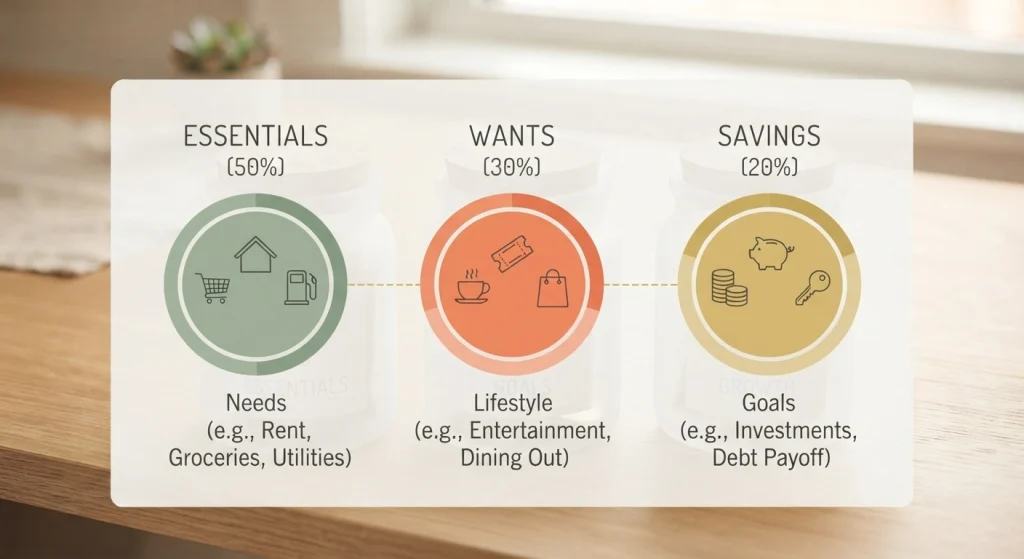
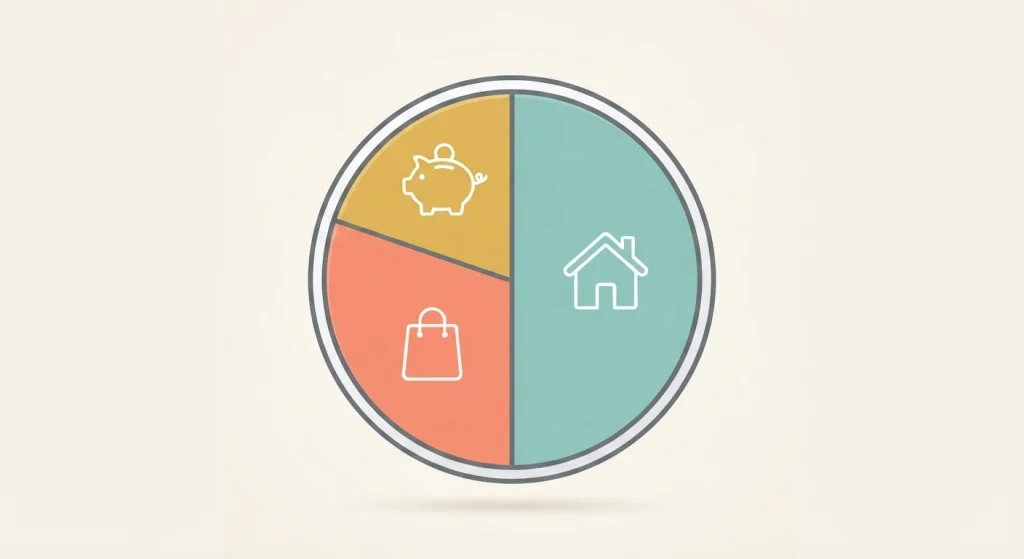
The 50/30/20 rule divides your after-tax (take-home) income into three simple buckets:
- 50% for Needs – the expenses you cannot avoid
- 30% for Wants – things that improve your life but are not essential
- 20% for Savings and Debt Repayment – building your future financial security
This method was popularized by Senator Elizabeth Warren and her daughter Amelia Warren Tyagi in their 2005 book, “All Your Worth: The Ultimate Lifetime Money Plan.” Its simplicity is exactly why it has stayed popular for two decades, you do not need to track dozens of categories, just three.
How the 50/30/20 Rule Compares to Other Methods
If you have read our other budgeting guides, you already know two more detailed methods. Here is how all three compare:
| Method | How it works | Best for |
| 50/30/20 rule | Top-down: set three percentage targets and fit spending to them | People who want simple guidelines without tracking every category |
| Zero-based budgeting | Bottom-up: assign every dollar a specific job until you reach zero | People who want maximum control and precision |
| Cash envelope budgeting | Physical cash limits for spending categories | People who overspend with cards and need a visible limit |
None of these methods is objectively “best” the right one depends on how much detail you want to manage. The 50/30/20 rule is the easiest starting point, which is why it is often recommended to beginners.
Step-by-Step: How to Use the 50/30/20 Rule
Step 1: Calculate Your After-Tax Income
Add up your take-home pay the amount that actually lands in your bank account after taxes, not your gross salary.
Example: Maria brings home $3,500 per month after taxes.
Step 2: Calculate Your Three Amounts
Multiply your income by each percentage:
- Needs (50%): $3,500 × 0.50 = $1,750
- Wants (30%): $3,500 × 0.30 = $1,050
- Savings and debt (20%): $3,500 × 0.20 = $700
$1,750 + $1,050 + $700 = $3,500, which matches Maria’s full income exactly.
Step 3: Sort Your Expenses Into the Right Bucket
This is the step people usually find trickiest deciding what counts as a “need” versus a “want.” Here is a clear breakdown:
Needs (the 50%):
- Rent or mortgage
- Utilities (electric, water, basic internet)
- Groceries (not restaurants)
- Minimum debt payments
- Car payment and insurance, if needed for work
- Health insurance
Wants (the 30%):
- Dining out
- Streaming subscriptions
- Entertainment and hobbies
- Vacations
- Upgraded versions of things you need (e.g., a nicer apartment than you strictly require)
Savings and Debt (the 20%):
- Emergency fund contributions
- Retirement savings
- Extra payments beyond the minimum on debt
- Saving for a specific goal, like a house down payment
Step 4: Build Your Actual Budget
Here is what Maria’s full budget looks like once she sorts her real expenses into the three buckets:
| Category | Amount | Bucket |
| Rent | $1,000 | Needs |
| Utilities | $150 | Needs |
| Groceries | $400 | Needs |
| Car payment and insurance | $200 | Needs |
| Needs total | $1,750 | |
| Dining out | $250 | Wants |
| Streaming subscriptions | $40 | Wants |
| Entertainment | $200 | Wants |
| Clothing | $150 | Wants |
| Miscellaneous | $410 | Wants |
| Wants total | $1,050 | |
| Emergency fund | $300 | Savings/Debt |
| Retirement savings | $250 | Savings/Debt |
| Extra credit card payment | $150 | Savings/Debt |
| Savings/Debt total | $700 | |
| Grand total | $3,500 |
Every category fits neatly under its bucket’s limit, and the buckets add up to Maria’s full income.
Step 5: Adjust When Your Real Numbers Don’t Match
Most people’s real spending does not perfectly match 50/30/20 on the first try and that is completely normal. If your needs are eating up 65% of your income instead of 50%, for example, that is useful information, not a failure. It tells you that either your fixed costs (like rent) are too high for your income, or you need to look for ways to lower them before the 30/20 split can work as intended.
Is the 50/30/20 Rule Realistic for Everyone?
It is worth being honest here: the 50/30/20 rule works best for people earning a middle income in an area with a moderate cost of living. If you live somewhere with high rent, your “needs” may naturally take up more than 50% of your income, and that is not a personal failure it is math.
If the standard percentages do not fit your situation, you can adjust them. A common alternative for high cost-of-living areas is 60/25/15, shifting more room into needs while still protecting some savings. The percentages are a guideline, not a strict rule, so treat them as a starting point you can bend to fit your real life.
Pros and Cons of the 50/30/20 Rule
Pros:
- Very simple — only three categories to track
- Easy to calculate with basic math
- Flexible enough to adjust for your situation
- Great starting point if you are new to budgeting
Cons:
- Less precise than zero-based budgeting
- Does not tell you exactly how to spend within each bucket
- May not fit high cost-of-living areas without adjustment
- Requires you to separately track spending to know if you’re on target, since the rule itself is just a guideline
Common Mistakes to Avoid
- Misclassifying wants as needs. A streaming subscription is a want, even if it feels essential. Be honest with these categories, or the whole method loses its usefulness
- Ignoring the savings bucket first. It is tempting to spend the 20% when money feels tight, but treating savings as optional defeats the purpose of the rule.
- Never checking in. The 50/30/20 rule sets targets, but you still need to track actual spending against those targets, the rule itself does not track your money for you.
- Giving up because the percentages don’t fit. If your numbers are off, adjust the ratio to something realistic for your income and area, rather than abandoning budgeting altogether
Getting Started This Week
You can set up your first 50/30/20 budget in about ten minutes:
- Calculate your monthly take-home income
- Multiply it by 0.50, 0.30, and 0.20 to get your three target amounts.
- Sort your actual expenses into needs, wants, and savings/debt, and compare the totals to your targets.
If your real spending does not match the targets right away, that is fine, use the gap as information to guide your next few months, not as a reason to quit. Whether you stick with 50/30/20 or eventually move toward a more detailed method like zero-based budgeting, the goal is the same: understanding where your money goes and directing it on purpose.







3 Comments