
“Passive income” gets thrown around a lot online, often with promises of earning money while you sleep with zero effort. The truth is more grounded: passive income usually takes real upfront work or money, and it builds slowly. But once it is set up, it can keep paying you with little ongoing effort. In this guide, we break down the most realistic passive income ideas for beginners, with honest numbers, startup costs, and effort levels for each one.
Quick Answer: The most realistic passive income ideas for beginners in 2026 are high-yield savings accounts, index funds, dividend stocks, REITs, CDs and Treasury bills, plus time-based projects like digital products, blogging, and affiliate marketing. Every option needs upfront money or time, and most grow slowly, so the smartest approach to passive income for beginners is to start with one and reinvest what you earn.
If you read our guide on 10 side hustles you can start this weekend, you already know about active income — trading your hours directly for money. This guide covers the other half: how to make passive income that keeps coming in even when you are not actively working.
Table of Contents
What Passive Income Actually Means
True passive income requires one of two things upfront: money to invest, or time to build something once that keeps paying you afterward. There is no such thing as income with zero initial effort or capital. Anyone who tells you otherwise is usually selling something.
With that honest framing, here are the passive income ideas 2026 beginners can actually use, sorted by how much money versus time they require to start.
Passive Income Ideas 2026: 9 Realistic Options for Beginners
1. High-Yield Savings Accounts
This is the simplest, lowest-effort passive income there is, though it is also the smallest in scale.
How it works: You deposit money into a high-yield savings account, which pays you interest just for keeping your money there.
Realistic numbers: As of late September 2026, the national average savings account rate is about 0.64% APY, but high-yield savings accounts at online banks pay around 4% APY. On a $5,000 balance, that is the difference between earning about $30 a year in a typical bank account versus roughly $200 a year in a high-yield account.
Startup cost: Whatever you can save. Even $100 is enough to start.
Effort level: Nearly zero once opened. This is a good first step before exploring riskier options, since deposits at FDIC-insured banks are protected up to $250,000 per depositor, per bank, per ownership category.
2. Dividend-Paying Stocks
How it works: Some companies share a portion of their profits with shareholders regularly, usually every quarter, just for owning their stock.
Realistic numbers: Dividend yields vary by company and change over time, so rather than quoting a fixed percentage, the honest takeaway is this: dividend income is proportional to how much you invest, and it typically grows slowly as companies increase their payouts over time. This is a long-term wealth-building tool, not a fast income source.
Startup cost: You can start with very little through a brokerage account that allows fractional shares, meaning you do not need enough money to buy a whole share.
Effort level: Low once you have chosen investments, but requires real investing knowledge and comes with market risk. Your investment value can go down as well as up.
3. Real Estate Investment Trusts (REITs)

How it works: A REIT is a company that owns and operates income-producing real estate, like apartments, warehouses, or shopping centers. When you buy shares, you earn a slice of the rental income without being a landlord.
Realistic numbers: REITs pay out most of their taxable income to shareholders as dividends, which is why they are popular with income investors. Payouts and share prices move with the real estate market, so income is not guaranteed.
Startup cost: The price of one share, or less with fractional shares. Publicly traded REITs are easy to buy and sell through any brokerage account.
Effort level: Low. Beginners should stick with publicly traded REITs or REIT index funds. Non-traded REITs can be hard to sell and often charge high fees.
4. Index Funds and ETFs
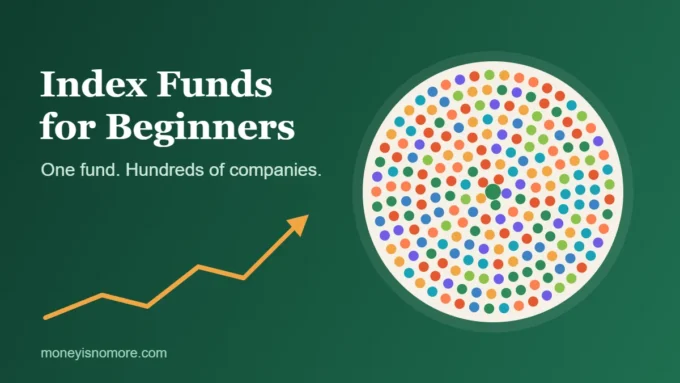
How it works: An index fund or ETF holds hundreds of stocks or bonds in a single investment. Many pay dividends, and you can set them to reinvest automatically so your money compounds over time.
Realistic numbers: Returns depend on the market and are never guaranteed. The real power is time: small, regular contributions left alone for years can grow into a meaningful income stream.
Startup cost: Many brokerages have no account minimums and offer fractional shares, so you can start with a few dollars.
Effort level: Very low. Set up automatic monthly investments and check in a few times a year. This is one of the most hands-off passive income ideas on this list. If you are just getting started, a plan like zero-based budgeting helps you find money to invest each month.
5. Certificates of Deposit (CDs) and Treasury Bills
How it works: You lend money to a bank (a CD) or the U.S. government (a Treasury bill) for a set period and earn a fixed rate of interest.
Realistic numbers: Rates are usually in the same range as high-yield savings accounts, but locked in for the full term. Interest on Treasury bills is exempt from state and local income tax.
Startup cost: Often $0 to $1,000 for CDs, and as little as $100 for Treasury bills.
Effort level: Almost none. The trade-off is that your money is tied up until the term ends, and CDs usually charge a penalty for early withdrawal.
6. Digital Products
How it works: You create something once, like a budget template, an ebook, printable planners, or a short online course, and sell it again and again on your own site or a marketplace.
Realistic numbers: Most digital products earn little at first. Sales grow as you build an audience and add more products, so think in months, not weeks.
Startup cost: Close to $0 if you use free design tools, plus small marketplace fees per sale.
Effort level: High upfront, low afterward. You will still spend some time on updates and customer questions.
7. Blogging or a YouTube Channel
How it works: You publish helpful content that people search for. Once it ranks, older posts and videos can earn ad revenue for years.
Realistic numbers: Most new blogs and channels earn nothing for the first several months. Ad programs have eligibility rules, and income depends on traffic and topic.
Startup cost: Low. A domain and hosting for a blog, or just a phone and free editing software for YouTube.
Effort level: Very high at the start. It becomes more passive only after you have a library of content that keeps bringing in visitors.
8. Affiliate Marketing
How it works: You recommend products you actually use and earn a commission when someone buys through your link. It pairs naturally with a blog, YouTube channel, or email newsletter.
Realistic numbers: Commissions are often a small percentage of each sale, so income depends on steady traffic and trust.
Startup cost: Usually free to join affiliate programs.
Effort level: Medium. You must clearly disclose affiliate links, and results depend on having an audience first.
9. Renting Out Things You Already Own
How it works: Rent out a spare parking space, storage space, camera gear, tools, or even your car when you are not using it.
Realistic numbers: Earnings depend heavily on where you live and what you own. Treat it as a small bonus, not a salary.
Startup cost: $0 if you already own the item.
Effort level: Low to medium. This is semi-passive, since you handle bookings and wear and tear. Check your insurance and any local rules first.
Passive Income Ideas Compared
Here is a quick side-by-side look at the passive income ideas above, so you can match each one to your budget and free time. The best passive income streams for you are the ones you can afford to start and stick with.
| Idea | Startup Cost | Upfront Time | Risk |
|---|---|---|---|
| High-yield savings | Low | Very low | Very low |
| CDs and Treasury bills | Low | Very low | Very low |
| Index funds and ETFs | Low | Low | Medium |
| Dividend stocks | Low to medium | Medium | Medium |
| REITs | Low to medium | Low | Medium |
| Digital products | Very low | High | Low |
| Blogging or YouTube | Low | Very high | Low |
| Affiliate marketing | Very low | High | Low |
| Renting out items | None | Low | Low to medium |
How to Make Passive Income: A 5-Step Plan for Beginners

Learning how to make passive income starts with your own finances. Passive income for beginners works best when you follow these steps in order:
- Build an emergency fund first. Keep a few months of expenses in a high-yield savings account before taking any investment risk.
- Pay off high-interest debt. Credit card interest usually costs far more than most investments earn.
- Automate your savings. A simple budget like the 50/30/20 rule helps you set aside money every month without thinking about it.
- Start with one idea. Pick one money-based option and, if you have time, one time-based project. Add more once they are running smoothly.
- Reinvest early earnings. Letting income compound in the early years is how small streams become large ones.
Don’t Forget About Taxes
Passive income is still taxable income. Interest from savings accounts and CDs, stock dividends, and profits from digital products or affiliate programs all generally need to be reported. REIT dividends are usually taxed as ordinary income rather than at lower qualified dividend rates. Keep simple records and consider talking to a tax professional as your income grows.
Frequently Asked Questions
What are the best passive income ideas for beginners?
The best passive income ideas for beginners are high-yield savings accounts, index funds, and dividend-paying investments, because they are simple to start and need little ongoing effort. If you have more time than money, digital products or a blog can work well over the long term.
How much money do I need to start earning passive income?
You can start with very little. Many savings accounts and brokerages have no minimums, and fractional shares let you invest a few dollars at a time. The more you invest, the more income you earn.
Is passive income really passive?
Not at first. Every option requires upfront money, time, or both. It becomes more passive once it is set up, but most streams still need occasional check-ins.
Is passive income taxable?
Yes. Interest, dividends, and business income are generally taxable. Keep records of what you earn and set money aside for taxes.
How do I make passive income with little money?
If you want to know how to make passive income with little money, start with a high-yield savings account, then invest small amounts in index funds using fractional shares. If you have more time than cash, build a digital product or start a blog, which cost very little but take effort upfront.
What are the best passive income streams in 2026?
The best passive income streams in 2026 for most beginners are high-yield savings accounts, Treasury bills, index funds, dividend stocks, and REITs, plus digital products and content for people willing to put in time upfront.
Final Thoughts on Passive Income Ideas
The most realistic passive income ideas are not get-rich-quick schemes. They are simple tools, like high-yield savings, index funds, and REITs, plus projects you build once and grow over time. Start with a solid emergency fund, choose one idea that fits your budget and schedule, and let it grow. The best passive income streams usually combine a little money and a little effort. Pair it with a side hustle for extra cash to invest, and your passive income can snowball faster than you think. For more everyday ways to free up money to invest, see our saving money tips.





Leave a comment