


Learning how to save money on groceries is one of the fastest budget wins there is, because you can cut this bill this week without cancelling a service or waiting for a raise. The catch is that most “save money” advice is either too vague (“just spend less!”) or too extreme (couponing for six hours a week).
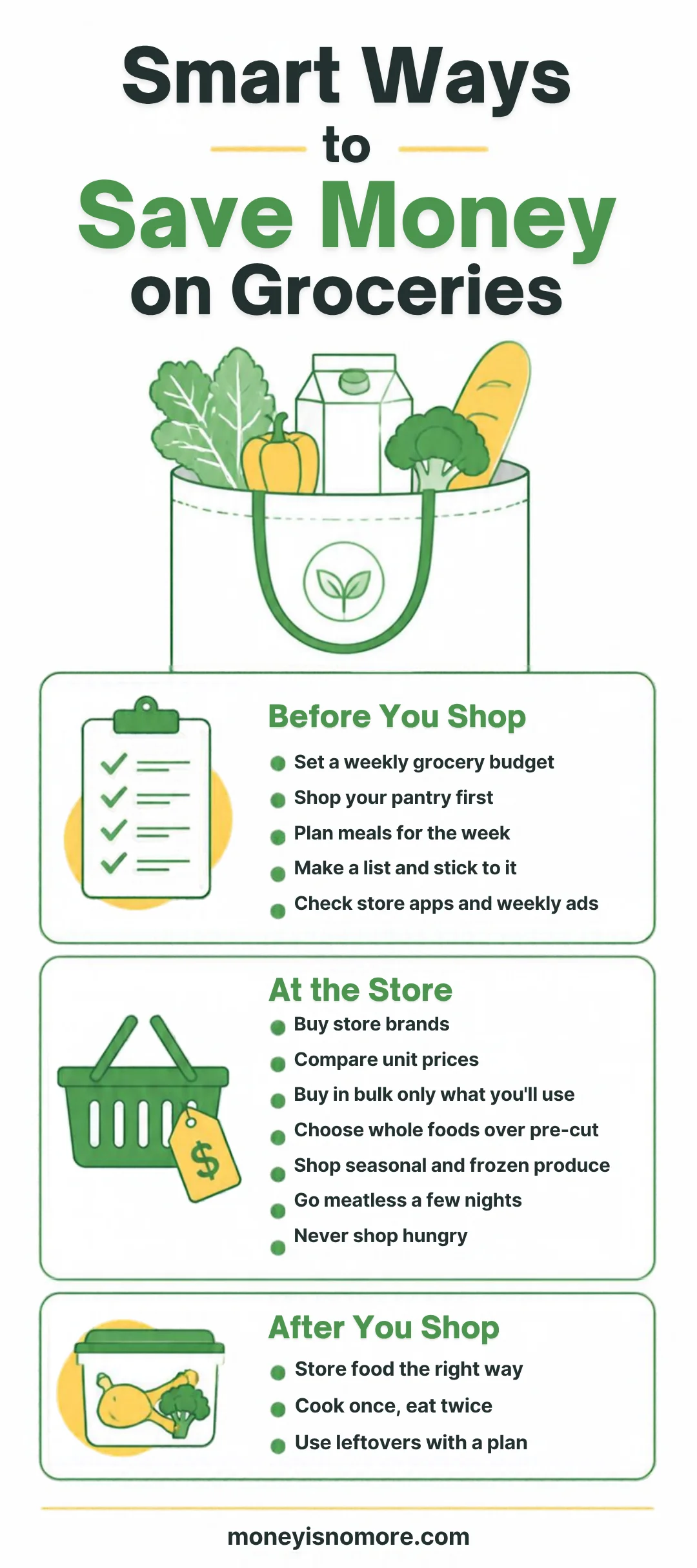
This guide sits in the middle. Below are the best ways to save money on groceries that real households use, grouped by when they happen: before you shop, at the store, and after you get home. Pick three or four that fit your life, and you’ll see the difference on your next receipt.
Table of Contents
Why Your Grocery Bill Feels Out of Control
Before the tips, it helps to know where the money leaks out. For most families it isn’t one big mistake. It’s a handful of small ones repeated every week:
- Shopping without a plan and buying “just in case” items
- Paying extra for name brands and pre-cut convenience foods
- Making several small trips instead of one planned trip
- Throwing away food that spoiled before anyone ate it
That last one is bigger than most people think. The USDA estimates that 30 to 40 percent of the U.S. food supply is wasted, and a large share of that happens in our own kitchens. Food you throw out is money you paid for and got nothing back. Fix the leaks and the savings follow.
How to Save Money on Groceries Before You Shop
1. Set a Weekly Grocery Budget
The first step in learning how to save money on groceries is knowing what you spend now. Look at your last month of bank or card statements, add up every grocery charge, and divide by four. That’s your current weekly spend. Now set a target 10 to 15 percent lower and give yourself a month to hit it.
If you already follow a system like the 50/30/20 rule, groceries belong in the “needs” bucket. Giving them a fixed number makes every other tip on this list easier to stick to.
2. Shop Your Pantry and Fridge First
Before writing a list, open your cupboards. That half bag of rice, the frozen chicken, and the can of beans you forgot about can become two dinners. Building meals around what you already own is one of the fastest ways to save money on groceries, because the cheapest food is the food you already paid for.
3. Plan Meals for the Week
Meal planning takes about 15 minutes. Pick five or six dinners, plan lunches around leftovers, and choose recipes that share ingredients. Cilantro bought for Monday’s tacos can go into Wednesday’s rice bowl. Shared ingredients mean less waste and a shorter list.
4. Make a List and Stick to It
Ask any frugal shopper how to save money on groceries and you’ll hear the same answer first: make a list. It’s your best defense against impulse buys. Organize it by store section (produce, dairy, frozen, pantry) so you move through the aisles quickly and spend less time tempted by end-cap displays. If something isn’t on the list and isn’t a true emergency, it waits until next week.
5. Check Store Apps and Weekly Ads
Most major grocery chains have free apps with digital coupons you can “clip” with one tap. Spend five minutes before each trip loading the ones that match your list. Also glance at the weekly ad and build a meal or two around what’s on sale, especially meat, which tends to be the most expensive item in the cart.
Smart Ways to Save Money on Groceries at the Store
6. Buy Store Brands
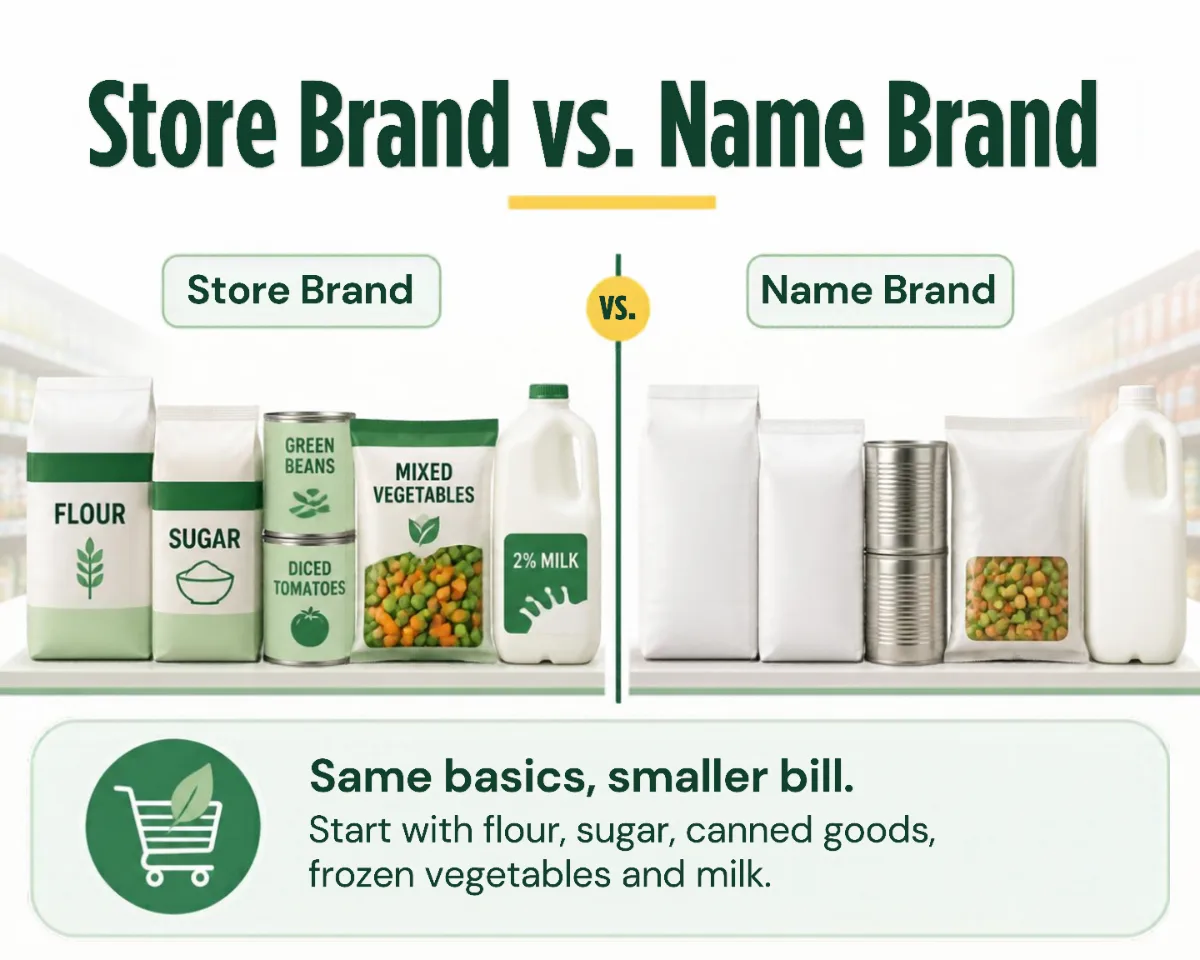
If you want to know how to save money on groceries without changing what you eat, start here. According to Consumer Reports, store-brand products typically sell for 25 to 30 percent less than their name-brand counterparts, and many are made to the same standards. Start with basics where you won’t notice a difference: flour, sugar, canned tomatoes, frozen vegetables, milk, and cleaning supplies.
7. Compare Unit Prices, Not Sticker Prices
The big box isn’t always the better deal. Look at the small “unit price” on the shelf tag, which shows the cost per ounce, pound, or count. It lets you compare a large package to a small one, or a name brand to a store brand, in two seconds. Sometimes the sale price on a smaller size beats the “family size” bulk option.
8. Buy in Bulk, But Only What You’ll Use
Bulk buying works for shelf-stable items you use constantly: rice, oats, dried beans, pasta, toilet paper, and frozen goods. It backfires on fresh produce and anything your family doesn’t eat often. A 10-pound bag of potatoes is only a deal if you eat them before they sprout.
9. Choose Whole Foods Over Pre-Cut and Pre-Packaged
You pay for convenience. A block of cheese or a whole chicken costs less per serving than shredded cheese or boneless breasts. Spend ten minutes chopping at home and keep that markup in your pocket.
10. Shop Seasonal Produce and the Frozen Aisle
Fruits and vegetables in season are cheaper and taste better. Out of season, head to the freezer section. Frozen vegetables and berries last for months, often cost less than fresh, and keep you from ordering takeout on busy nights.
11. Go Meatless a Few Nights a Week
Meat is usually the priciest part of any grocery run. Swapping two or three dinners a week for beans, lentils, eggs, or tofu can trim your bill without making meals feel skimpy. Chili, stir-fries, and pasta dishes all work well with less meat or none at all.
12. Shop Alone, and Never Hungry
Shopping hungry makes snacks look irresistible, and shopping with company adds items you didn’t plan for. Eat first, bring your list, and keep the trip short.
After You Shop: Stop Wasting What You Buy
13. Store Food the Right Way
Knowing how to save money on groceries also means making what you buy last longer. Freeze bread you won’t finish in a few days, keep onions and potatoes apart, and put newer groceries behind older ones so the oldest items get used first.
14. Cook Once, Eat Twice
Make a bigger batch of soup, chili, casseroles, or rice, then freeze portions for later. Batch cooking saves money twice: you buy ingredients in larger, cheaper quantities, and you have a ready meal on nights when you’d otherwise order delivery.
15. Use Leftovers With a Plan
Leftovers only save money if someone eats them. Make a “leftover night” part of your weekly meal plan, or turn extras into something new. Roast chicken becomes chicken salad, leftover rice becomes fried rice, and soft vegetables go into soup or an omelet.
Track How Much You Save on Groceries
Tracking is how you know your plan to save money on groceries is working. Log each trip in a simple spreadsheet or budgeting app for a month. Seeing your weekly total drop is great motivation. If you like hands-on systems, the cash envelope method works especially well for groceries: put your weekly grocery money in an envelope, and when it’s gone, you’re done until next week.
Want to give every dollar a job? Pair your new grocery habits with zero-based budgeting so the money you save goes straight toward savings or debt.
Frequently Asked Questions
What is the fastest way to save money on groceries?
Switching to store brands and shopping with a list are the quickest wins. Both work on your very next trip and require almost no extra time.
How much should I spend on groceries each month?
It depends on household size, location, and diet. The USDA publishes monthly food plans at four cost levels (thrifty, low-cost, moderate, and liberal) that make a useful benchmark. Start with what you spend now, then aim to trim 10 to 15 percent.
Is buying in bulk always cheaper?
No. Bulk buying saves money only on items you’ll use before they expire. Always check the unit price, and skip bulk deals on fresh foods your family doesn’t eat quickly.
The Bottom Line
The best ways to save money on groceries aren’t complicated. Plan your meals, shop with a list, buy store brands, compare unit prices, and stop throwing food away. You don’t need to do all 15 at once. Start with three this week, and once they become habits, add a few more. Now you know how to save money on groceries, and small changes at the checkout add up to real money by the end of the year.







1 Comment