


If you have more than one debt, the hardest part often isn’t finding extra money. It’s deciding which balance to attack first. The two most popular answers are the debt snowball and the debt avalanche.
Both methods work. Both get you to zero. But they take different paths, and the right one for you depends on whether you need fast motivation or the lowest possible cost.
This guide to debt snowball vs avalanche breaks down how each method works, runs both through the same real-world example, and helps you decide which one to use.
Table of Contents
Why Your Payoff Order Matters
Interest is what makes debt expensive. According to the Federal Reserve’s consumer credit data, credit card accounts that were charged interest paid an average rate of 22.15% in the second quarter of 2026. At that rate, a balance you ignore keeps growing quickly.
When you have several debts, you’ll always pay the minimum on all of them. The question is where to send any extra money. That choice affects how much interest you pay and how quickly you see progress.
Whichever method you choose, start by listing every debt in one place: the lender, the balance, the interest rate and the minimum payment. Having everything in one simple table makes it easy to see your payoff order, track progress each month and notice when a balance is about to disappear.
What Is the Debt Snowball Method?
The debt snowball method means paying off your debts from smallest balance to largest, regardless of interest rate.
Here’s how it works:
- List all your debts from the smallest balance to the largest.
- Pay the minimum on every debt.
- Put every extra dollar toward the smallest balance.
- When that debt is gone, roll its payment into the next smallest debt.
- Repeat until you’re debt-free.
The “snowball” name comes from the way your payment grows. Each time you clear a debt, the money that was going to it gets added to the next one, so your payments keep getting bigger.
Pros of the snowball method
- Quick wins. You eliminate your first debt fast, often within a few months.
- Fewer bills to track. Each closed account means one less due date to manage.
- Strong motivation. Seeing accounts hit zero makes it easier to stick with the plan.
Cons of the snowball method
- Usually costs more in interest. If your biggest debts carry the highest rates, they keep growing while you work on smaller ones.
- Can take slightly longer. Paying more interest means a bit more time in debt.
What Is the Debt Avalanche Method?
The debt avalanche method means paying off your debts from highest interest rate to lowest, regardless of balance.
Here’s how it works:
- List all your debts from the highest interest rate to the lowest.
- Pay the minimum on every debt.
- Put every extra dollar toward the debt with the highest rate.
- When it’s paid off, roll that payment to the next highest rate.
- Repeat until you’re debt-free.
Pros of the avalanche method
- Lowest total interest. Mathematically, this is the cheapest way to pay off debt.
- Usually the fastest. Less interest means more of each payment goes to principal.
Cons of the avalanche method
- Slow first win. If your highest-rate debt also has a big balance, it may take a year or more to pay off the first account.
- Easier to lose momentum. Without visible progress, some people give up before the math pays off.
Snowball vs. Avalanche: A Side-by-Side Example
To compare the two methods fairly, we ran the same debts through both. Imagine you owe $16,000 across four accounts and can put $750 a month toward debt in total.
| Debt | Balance | Interest rate | Minimum payment |
|---|---|---|---|
| Store card | $900 | 19% | $35 |
| Credit card | $4,500 | 24% | $120 |
| Personal loan | $2,600 | 12% | $90 |
| Car loan | $8,000 | 7% | $250 |
Your minimums add up to $495, which leaves $255 a month of extra payment to direct.
With the snowball method, you attack the store card first. It’s gone in month 4. The personal loan follows in month 10, the credit card in month 19, and the car loan in month 25. Total interest paid: about $2,242.
With the avalanche method, you attack the 24% credit card first. It isn’t paid off until month 14. Then the store card falls in month 16, the personal loan in month 19, and the car loan in month 24. Total interest paid: about $1,973.
What the example shows
- The avalanche saved about $269 and finished one month sooner.
- The snowball delivered its first win 10 months earlier (month 4 vs. month 14).
That’s the real trade-off in a nutshell. The avalanche wins on cost. The snowball wins on early motivation. In many real situations, the gap between them is smaller than people expect.
Estimates assume fixed rates, no new charges, and interest calculated monthly. Your results will vary.
What Research Says About the Snowball Method
You might assume the cheaper method is always better. But behavior matters as much as math.
Researchers at Northwestern University’s Kellogg School of Management studied nearly 6,000 people in a debt settlement program. They found that people who closed out smaller balances first were more likely to finish paying off their debt. The number of accounts closed predicted success better than the total dollars paid.
In other words, a plan that costs a bit more but that you actually finish beats a perfect plan you abandon.
Which Method Should You Choose?

When it comes to debt snowball vs avalanche, there is no single right answer. The best method is the one that keeps you making extra payments month after month until every balance is gone. If you are still unsure, you can start with the snowball to build momentum and switch to the avalanche once your smallest balances are paid off.
Choose the debt snowball if:
- You’ve tried to pay off debt before and lost motivation.
- You have several small balances you could clear quickly.
- The interest rates on your debts are fairly close together.
- Juggling many due dates is stressing you out.
Choose the debt avalanche if:
- You’re disciplined and motivated by saving money.
- One debt has a much higher rate than the others.
- Your highest-rate debt also happens to have a manageable balance.
- You want to pay the least possible interest.
Try a hybrid if you’re unsure. Knock out one or two tiny balances first for a quick win, then switch to the avalanche for everything else. You get early momentum without giving up much in interest savings.
How to Find Extra Money for Debt Payoff

Whichever method you choose, the speed depends on how much extra you can pay each month. A few places to look:
- Build a budget that assigns every dollar. Zero-based budgeting is especially good at uncovering money for debt.
- Use cash for problem categories. Cash envelope budgeting can stop overspending on groceries or dining out.
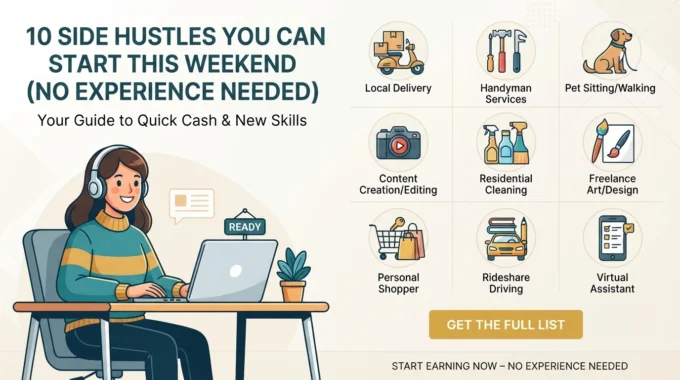
- Add a small income stream. Even $200 a month from one of these side hustles you can start this weekend can shave months off your timeline.
- Get off the paycheck-to-paycheck cycle. Our guide on how to stop living paycheck to paycheck covers the first steps.
One more tip: keep a small cash cushion while you pay down debt. Without one, a single surprise expense ends up on a credit card, and you’re back where you started.
Frequently Asked Questions
Is the debt snowball or avalanche faster?
The avalanche is usually slightly faster and cheaper because you pay less interest. The snowball gives you faster individual wins, which helps many people stay on track.
Does the debt snowball hurt your credit?
No. Paying down balances generally helps your credit by lowering your credit utilization. Just keep paying at least the minimum on every account so nothing goes late.
Should I close credit cards after paying them off?
Not necessarily. Closing a card can reduce your available credit and raise your utilization ratio. If the card has no annual fee, it’s often better to keep it open and unused.
Can I switch from snowball to avalanche later?
Yes. Many people start with the snowball to build momentum, then switch to the avalanche once they’re in the habit of making extra payments.
Should I save or pay off debt first?
Most people benefit from a small emergency cushion first, then aggressive debt payoff. Without savings, unexpected costs tend to go back on credit cards.




1 Comment